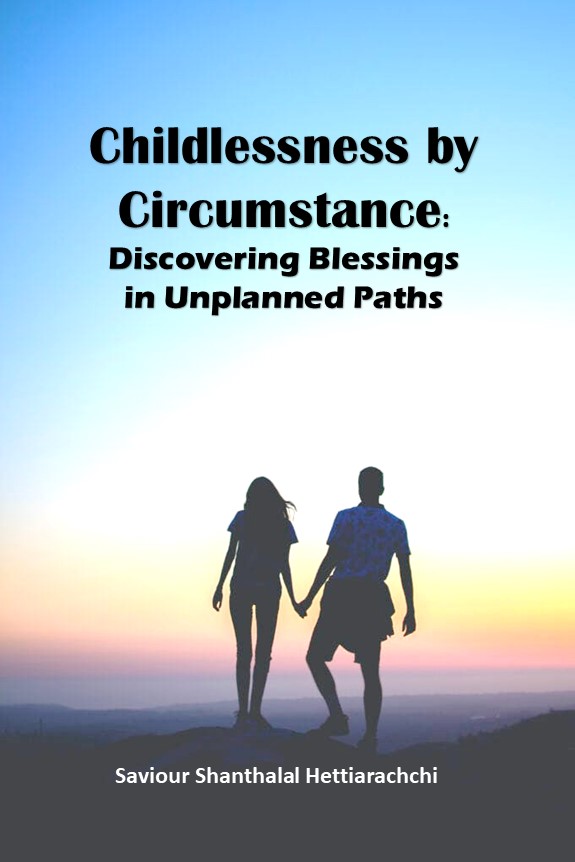
Discovering Blessings in Unplanned Paths
Editorial Insight
In a world that often emphasizes the traditional markers of success and fulfilment—marriage, family, career—there exists a quieter, less celebrated narrative: the story of those who walk a path not of their choosing, but of circumstance. Among the many experiences that fall into this category, the journey of childlessness, especially when unexpected or unplanned, can be one of the most profound and deeply personal.
This book, Childlessness by Circumstance: Discovering Blessings in Unplanned Paths, seeks to explore and illuminate the complex emotions, challenges, and ultimately, the unexpected blessings that accompany such a journey. Childlessness, whether due to infertility, health issues, personal choices, or other life circumstances, is often shrouded in silence and misunderstood by those who have not walked that path.
Society frequently equates fulfilment with parenthood, leaving those without children to navigate their feelings in a landscape that can sometimes feel isolating or incomplete. Yet this book is not a lament; it is a celebration of resilience, discovery, and the countless ways in which life unfolds in rich and rewarding ways, even when it does not align with the expectations set before us.
Writing this book has been a deeply personal endeavour. It stems from both my own experiences and the stories of many others who have shared their journeys with me. Through candid conversations, reflections, and research, I have come to realize that childlessness, far from being a deficit or something to be pitied, is a life path that can be filled with meaning, purpose, and profound connections.
The absence of children does not equate to the absence of love, fulfilment, or legacy. In fact, for many, it opens up new avenues of giving, nurturing, and leaving a lasting impact on the world. The inspiration for this book came from a desire to offer a different narrative, one that challenges the conventional wisdom that equates having children with a complete and successful life.
It is a narrative that seeks to honour the diverse experiences of those who are childless by circumstance and to affirm that their lives are no less valuable, meaningful, or blessed than those who are parents. This book aims to provide comfort and solidarity to those who find themselves in a similar situation, and to offer a broader understanding to those who may not fully grasp the depth of this experience.
Part – 1
Discovering Blessings in Unplanned Paths
Understanding Childlessness by Circumstance
Chapter One :
Introduction
The term “childless by circumstance” refers to individuals or couples who, despite their desire or willingness to have children, find themselves without offspring due to factors beyond their control. This experience is distinct from being “childfree by choice,” where the decision not to have children is a deliberate and intentional one.
For those who are childless by circumstance, the journey is often marked by unforeseen challenges, deep emotional experiences, and the need to reconcile their hopes and dreams with an unexpected reality.
Childlessness by circumstance can arise from a variety of situations, each of which brings its own set of emotional and practical challenges. Among the most common causes is infertility, where biological or medical barriers prevent pregnancy despite a strong desire to conceive. This experience often involves years of trying to conceive, undergoing various fertility treatments, and enduring repeated disappointments.
For many, the eventual realization that biological parenthood may not be possible leads to a profound sense of loss and grief as the dream of raising a child slips away despite all efforts.
The Broader Implications
Health issues, the absence of a suitable partner, and financial constraints can also play crucial roles in childlessness by circumstance. These challenges introduce complex dynamics into personal relationships and individual life plans.
For example, medical conditions or treatments may make pregnancy unsafe or impossible, forcing individuals to make heart-wrenching decisions that balance their health and their desire for children.
Financial instability or job loss may make it impractical to start a family, even for those who deeply wish to do so. Additionally, many people envision having children within the context of a loving, stable relationship, but not everyone finds that partner at the right time. As time passes, the biological window for having children may close, leaving individuals or couples to face the reality of childlessness. This experience can be particularly poignant, involving not only the loss of the dream of parenthood but also the loss of the anticipated partnership in raising a family.
Chapter Two
Common Societal Expectations and Pressures
Cultural Norms and Traditions
In many cultures, the expectation of parenthood is deeply ingrained, with the assumption that marriage or long-term partnership will naturally lead to the birth of children. Society often views having children as a rite of passage into adulthood and a crucial step in building a fulfilling life. This pervasive belief is reinforced through media, family traditions, religious teachings, and even casual conversations, creating a powerful narrative that equates personal success and happiness with raising a family.
For those who find themselves childless by circumstance, this societal pressure can be overwhelming, leading to feelings of inadequacy, isolation, and even shame.
1.The Role of Media and Pop Culture
●
Media, including films, television shows, and advertisements, often reinforce societal expectations by portraying the ideal family as one that includes children. This portrayal contributes to the cultural narrative that parenthood is an essential component of a happy and successful life. In these representations, families with children are often depicted as complete, thriving, and happy, while characters who choose not to have children or who are unable to have them are frequently shown as lacking or struggling with a sense of incompleteness.
For example, in many popular films and TV shows, the storyline revolves around the characters’ journey towards parenthood, reinforcing the idea that having children is a natural and expected part of life. Conversely, characters who are childless are often portrayed as facing a crisis or living an unfulfilled life, further perpetuating the stigma against childlessness. Even in advertising, products and services are often marketed towards parents, with imagery that idealizes family life with children. This pervasive media portrayal can influence public perceptions, making it challenging for childless individuals to feel validated in their life choices.
Moreover, social media platforms can amplify these societal norms, as users frequently share images and stories that celebrate milestones related to parenthood, such as pregnancy announcements, baby showers, and family vacations. This constant stream of content can create a sense of exclusion for those who do not have children, reinforcing the idea that their lives are less meaningful or successful.
2. Religious Teachings
Religious teachings have historically played a significant role in shaping societal views on procreation and family life. In many religions, having children is considered a divine blessing and a moral obligation. For example, in certain interpretations of Christianity, procreation is seen as part of God’s plan for humanity, and couples are encouraged to “be fruitful and multiply.” Similarly, in Judaism, children are viewed as a gift from God, and having a large family is often considered a sign of divine favour.
In Islam, procreation is also emphasized as a means of fulfilling God’s will and continuing the Muslim community. Children are seen as a source of joy and as a way to ensure the survival of the faith. Hinduism, too, places a strong emphasis on the importance of family and procreation, with many religious texts highlighting the role of children in fulfilling one’s dharma (duty) and achieving spiritual growth.
These religious teachings can create an environment where individuals feel a deep sense of obligation to have children, even if it goes against their personal desires or if they face significant challenges, such as infertility. For some, the pressure to conform to these expectations can lead to feelings of guilt, shame, or inadequacy if they are unable or choose not to have children. In communities where religious beliefs are deeply intertwined with cultural norms, the pressure to procreate can be particularly intense, making it difficult for individuals to pursue alternative life paths without facing criticism or ostracization.
3. Family Expectations and Pressures
In many cultures, family expectations and pressures regarding procreation can be overwhelming. Parents and grandparents often express a strong desire for grandchildren, viewing them as a continuation of the family name, legacy, and traditions. This expectation is especially prevalent in societies where family lineage and heritage are highly valued, and where having children is seen as a key responsibility of adulthood.
For couples struggling with infertility, the pressure to produce grandchildren can be particularly distressing. They may feel as though they are disappointing their families or failing to meet their obligations. This emotional burden can lead to strained relationships within the family, as well as feelings of isolation, frustration, and sadness for the couple.
Even for those who choose to remain childless, the decision can be met with resistance, disappointment, or even hostility from family members. They may face constant questioning about their choice, with some relatives expressing concern that the couple will regret their decision later in life. In some cases, this pressure can lead to tension and conflict within the family, as well as a sense of alienation for the childless individuals.
In certain cultures, the expectation to have children is not just a personal matter but is seen as a collective family duty. The pressure to conform to this expectation can be so strong that it overshadows personal preferences and desires, making it difficult for individuals to make autonomous decisions about their lives. The societal value placed on having children can make it challenging for those who are childless to feel fully accepted and respected within their own families.
4. Social Status and Acceptance
In many cultures, having children is closely linked to social status and acceptance. Parenthood is often viewed as a sign of maturity, stability, and responsibility. Those who have children are frequently seen as having achieved an important life milestone, which can elevate their standing in the community. In contrast, individuals without children may be viewed with suspicion, pity, or even disdain, as their childlessness is sometimes perceived as a failure to fulfil a fundamental social role.
Social events and community gatherings often centre around children and parenting, further reinforcing the idea that parenthood is the norm and childlessness is an exception. For instance, family-oriented festivals, school events, and community celebrations often prioritize activities and services for children and parents, leaving childless individuals feeling excluded or marginalized. This exclusion can contribute to a sense of social isolation, as those without children may struggle to find their place in these environments.
In some societies, the pressure to have children extends beyond the family and permeates the broader community. For example, in rural or traditional communities, having children is often seen as essential for maintaining social networks, economic stability, and cultural continuity. Childless individuals in these settings may face significant social stigma, and their contributions to the community may be undervalued or overlooked.
The association between parenthood and social status can also manifest in subtle ways, such as in conversations, where questions about family life and children are commonly used as icebreakers or indicators of success.
Those without children may find themselves having to explain or justify their childlessness, which can be uncomfortable or distressing. The societal emphasis on parenthood as a measure of success can make it challenging for childless individuals to feel fully accepted and valued within their social circles.
5. Gender Roles and Expectations
Traditional gender roles have long dictated the expectations placed on men and women regarding parenthood. For women, in particular, motherhood is often celebrated as the pinnacle of womanhood. Cultural narratives frequently emphasize that a woman’s true purpose is to become a mother, nurturing and raising children. This expectation is reinforced through various social, cultural, and religious messages that glorify motherhood as the ultimate expression of femininity. Women who do not have children, either by choice or circumstance, may be judged harshly by society, perceived as selfish, incomplete, or failing to fulfil their “natural” role.
These societal pressures can manifest in subtle and overt ways. Women may face constant inquiries about their plans to have children, and their decision to remain childless might be met with disbelief or pity. The assumption that all women desire motherhood can lead to a lack of understanding or support for those who choose a different path, resulting in feelings of alienation or guilt.
Men, too, are not immune to the pressures of traditional gender roles when it comes to parenthood. While the cultural expectations may be less intense than those placed on women, men are often encouraged to father children as a means of proving their virility and ensuring the continuation of the family line. In many societies, a man’s status or success may be partially measured by his ability to produce offspring, particularly male heirs.
The pressure on men to become fathers can also be linked to traditional views of masculinity, where providing for and protecting a family is seen as a key aspect of being a “real man.” Men who do not have children may be viewed as lacking in some way or failing to meet societal expectations. This can lead to feelings of inadequacy or pressure to conform, even if they have personal reservations about parenthood.
6. Impact on Mental Health
The cultural expectation to have children can have a profound impact on mental health, particularly for those who are unable or choose not to conform to societal norms. The pressure to fulfil traditional roles and the stigma associated with childlessness can lead to a range of negative emotional and psychological outcomes. For individuals or couples who are unable to have children due to infertility or other medical reasons, the societal emphasis on parenthood can exacerbate feelings of inadequacy, grief, and loss.
The emotional toll of infertility can be severe, with many experiencing depression, anxiety, and a diminished sense of self-worth. The relentless questioning and unsolicited advice from others can add to the stress, making it difficult for individuals to navigate their emotions and seek the support they need.
Those who choose not to have children may also face significant mental health challenges. The decision to remain childless can be met with judgment, criticism, or disbelief from family, friends, and society at large. This can lead to feelings of social isolation, as individuals may struggle to find communities that validate and support their choices. The stigma attached to childlessness can create a sense of being “othered,” where individuals feel disconnected from societal norms and expectations.
The internalization of these societal pressures can result in chronic stress, anxiety, and even depression. The lack of representation and understanding in media and social narratives can further compound these feelings, as childless individuals may feel that their experiences and perspectives are not valued or acknowledged.
Moreover, the lack of open dialogue and support systems for those who are childless—whether by choice or circumstance—can make it challenging for individuals to seek help. The fear of being judged or misunderstood may prevent them from discussing their struggles, leading to a worsening of their mental health. Creating spaces where childless individuals can share their experiences and receive support without judgment is crucial for promoting mental well-being and reducing the stigma associated with childlessness.
7. Shifting Norms and Emerging Perspectives
Despite the deep-rooted nature of cultural norms surrounding parenthood, attitudes toward these expectations are gradually shifting. In various parts of the world, there is a growing acceptance of diverse family structures and life choices, including the decision to remain childless. This shift is largely driven by movements advocating for reproductive rights, gender equality, and personal autonomy, which challenge traditional norms and promote a broader understanding of what it means to lead a fulfilling life.
One of the key drivers of this change is the increasing recognition of individual autonomy and the right to make personal choices without societal interference. The idea that individuals should have the freedom to choose whether or not to have children, based on their personal circumstances and desires, is gaining traction. This perspective is supported by movements that emphasize the importance of bodily autonomy and reproductive rights, advocating for the right to access contraception, abortion, and other reproductive health services.
Gender equality movements have also played a significant role in challenging traditional gender roles and expectations related to parenthood. As societies become more aware of the importance of gender equality, there is a growing recognition that both men and women should have the freedom to pursue their own life goals, whether or not they include having children. This has led to a more inclusive understanding of gender roles, where individuals are not solely defined by their ability to procreate.
The emergence of diverse family structures, such as single-parent families, blended families, and families without children, is also contributing to the shift in societal norms. These family models challenge the traditional notion of what a family “should” look like and demonstrate that there are many ways to create meaningful and fulfilling lives, regardless of whether they include children.
Moreover, the rise of child-free communities and networks, both online and offline, is helping to create spaces where individuals who choose not to have children can find support, validation, and a sense of belonging. These communities provide a platform for sharing experiences, discussing challenges, and celebrating the decision to remain childless without judgment.
As these emerging perspectives continue to gain momentum, there is hope that societal norms will become more inclusive and accepting of different life choices. This shift has the potential to reduce the stigma associated with childlessness and promote a more compassionate and understanding society, where individuals are free to define their own paths to happiness and fulfilment.
The Weight of Societal Pressure
The pressure to conform to these expectations manifests in various ways. Family members might subtly or overtly question when children will arrive, friends may assume that starting a family is a given, and even strangers might feel entitled to inquire about one’s plans for parenthood. For individuals or couples facing infertility, health challenges, or life situations that prevent them from having children, these interactions can be particularly painful. The constant reminders of what is “missing” according to societal standards can lead to internal conflict, making it difficult to fully embrace a life that deviates from the norm.
Moreover, the societal narrative often fails to recognize or validate the diverse reasons why people may be childless. Whether due to medical issues, financial constraints, personal choice, or other life circumstances, the lack of a child is frequently framed as a deficiency rather than a legitimate and fulfilling path. This can result in individuals feeling judged or misunderstood, as their personal experiences and decisions are overshadowed by the weight of societal expectations.
To navigate these pressures, it is essential to challenge these norms and reframe the narrative around childlessness, recognizing that fulfilment and purpose can be found in many forms.
Family Expectations
Family expectations often serve as one of the most potent sources of pressure for individuals who are childless by circumstance. The desire to continue the family line is a deeply ingrained expectation in many cultures, translating into both subtle and overt pressures on individuals and couples. Within the family unit, the continuation of the family name, the preservation of family traditions, and the fulfilment of parental hopes and dreams are often tied to the birth of children.
When these expectations are unmet, it can lead to disappointment, frustration, and even conflict within the family.
Navigating Family Dynamics
From an early age, many individuals are conditioned to believe that they will one day have children of their own, continuing the legacy of their family. This belief is often reinforced by parents, grandparents, and other relatives who may express their hopes and desires for grandchildren or great-grandchildren. These expectations are not merely personal; they are often viewed as a collective responsibility to the family. As a result, individuals may feel an intense obligation to fulfil these expectations, even if they face challenges such as infertility or choose not to have children for other reasons.
When these expectations are unmet, it can lead to a range of emotional responses within the family. Parents who have eagerly anticipated becoming grandparents may express disappointment or sadness, sometimes placing unintended guilt or pressure on their children. Siblings who have children may unintentionally exacerbate the situation by receiving more attention or approval from the family, further isolating those who are childless.
In some families, the expectation to have children is also tied to issues of inheritance and succession. The birth of a child, particularly a male child in certain cultures, may be seen as essential for the continuation of the family line and the passing down of wealth, property, or titles. This can create additional pressure on individuals to produce an heir, even when it is not feasible or desirable for them to do so.
Coping Strategies
Managing these expectations requires open and honest communication with family members, as well as setting boundaries that protect one’s emotional well-being. Engaging in candid conversations about the challenges and realities of childlessness can help family members understand that parenthood is not always a given, and that fulfilment can be found in many forms.
Social Stigma
Social stigma surrounding childlessness can be one of the most challenging aspects for those who find themselves unable or unwilling to have children. In many societies, there is a prevailing assumption that having children is a natural and necessary part of adult life. This assumption is often so deeply embedded in social norms that those who are childless by circumstance are viewed with suspicion, pity, or even contempt.
The stigma associated with childlessness can manifest in various ways, from subtle judgments to overt discrimination, and can have profound effects on an individual’s self-esteem and sense of belonging.
The Impact of Stigma
At the heart of the social stigma surrounding childlessness is the notion that people without children are somehow incomplete or selfish. This stereotype is particularly pervasive for women, who are often expected to prioritize motherhood as the pinnacle of their life’s purpose. Women who do not have children may be labelled as career-focused, self-centred, or unfulfilled, regardless of the reasons for their childlessness. This judgment is not only unfair but also ignores the complex and varied circumstances that lead to a life without children.
For men, the stigma can be slightly different but no less impactful. Childless men may be perceived as lacking in traditional markers of masculinity, such as the ability to provide for and protect a family. They may also face assumptions that they are immature or unwilling to take on the responsibilities of fatherhood. These stereotypes can be particularly damaging, as they reinforce narrow definitions of gender roles and limit the ways in which men are allowed to express their identity and purpose.
Addressing Social Stigma
To combat social stigma, it is essential to promote a more inclusive understanding of what constitutes a fulfilling and meaningful life. This can be achieved through education, advocacy, and representation in media and popular culture that showcases the diverse ways in which people live fulfilling lives outside of traditional family structures.
Chapter Three
The Emotional Journey
Introduction to the Emotional Landscape
The emotional journey of childlessness by circumstance is complex and multifaceted, often beginning with a deep sense of loss and confusion. For many, the realization that parenthood may not be possible triggers a whirlwind of emotions—ranging from sadness and frustration to anger and disbelief. These feelings are often compounded by societal expectations that equate fulfilment with raising children, leaving individuals feeling isolated and misunderstood.
The emotional landscape is unique to each person, yet there are common threads that connect those who walk this path.
Understanding the Emotional Phases
Navigating the emotional journey of childlessness can be likened to a process of mourning—a process that includes stages of grief such as denial, anger, bargaining, depression, and eventually, acceptance. Each stage presents its own challenges and requires its own strategies for coping.
·Denial: Often the first response, denial serves as a defence mechanism against the pain of realizing that parenthood may not be in the cards. It can manifest as continued efforts to conceive, even when the odds are slim, or in a refusal to acknowledge the emotional pain that accompanies the possibility of a childless future.
·Anger: As denial fades, anger can surface—anger at oneself, at one’s partner, or even at the broader world. This anger may stem from a sense of injustice or a feeling that life has been unfair.
·Bargaining: In this stage, individuals may find themselves making promises or seeking ways to negotiate their reality, often clinging to the hope that they might still become parents. Bargaining can lead to a desperate pursuit of alternatives, such as considering adoption or fertility treatments, even when the emotional and financial costs are high.
·Depression: When bargaining does not yield the desired outcome, it can give way to depression. This stage is marked by a profound sense of loss and mourning—not only for the children that were hoped for but also for the future that was envisioned.
·Acceptance: The final stage of the emotional journey is acceptance. This does not mean giving up hope but rather finding peace with the circumstances. Acceptance allows individuals to redefine their lives and to discover new sources of fulfilment and joy.
·
·
Discovering New Possibilities
As acceptance takes hold, a new world of possibilities begins to emerge. The journey from grief to acceptance opens doors to opportunities that might have been overlooked in the pursuit of parenthood. Individuals find themselves with the time, energy, and resources to explore other passions, build deep relationships, and contribute to the world in unique ways.
·Depression: When bargaining does not yield the desired outcome, it can give way to depression. This stage is marked by a profound sense of loss and mourning—not only for the children that were hoped for but also for the future that was envisioned.
·Acceptance: The final stage of the emotional journey is acceptance. This does not mean giving up hope but rather finding peace with the circumstances. Acceptance allows individuals to redefine their lives and to discover new sources of fulfilment and joy.
·
·
Discovering New Possibilities
As acceptance takes hold, a new world of possibilities begins to emerge. The journey from grief to acceptance opens doors to opportunities that might have been overlooked in the pursuit of parenthood. Individuals find themselves with the time, energy, and resources to explore other passions, build deep relationships, and contribute to the world in unique ways.
Embracing New Paths
·Personal Growth: Many find that the emotional challenges of childlessness lead to profound personal growth. The resilience developed through navigating these challenges often results in greater empathy, a deeper understanding of oneself, and a renewed sense of purpose.
·Career and Passion Projects: Without the demands of raising children, individuals often have more freedom to pursue career goals, hobbies, and passion projects. Some choose to dedicate themselves to causes they care about, finding fulfilment in making a difference in their communities.
Stories of Resilience and Acceptance
Throughout this emotional journey, stories of resilience and strength can provide much-needed inspiration and hope. Many individuals who have walked this path have found ways to channel their grief into meaningful and fulfilling endeavours. Some have dedicated their time to causes they are passionate about, others have pursued careers or hobbies that bring them joy, and many have formed deep and lasting connections with friends, family, and their communities.
These stories serve as a reminder that life, though different from what was initially imagined, can still be rich and rewarding.
Chapter Four
Reframing the Narrative
Introduction to Societal Narratives
Society has long perpetuated a narrative that equates fulfilment and success with parenthood. This narrative is deeply rooted in cultural, religious, and social norms that have been passed down through generations. For many, the expectation of becoming a parent is seen as a natural progression in life—an essential step in achieving a sense of purpose and legacy. However, for those who find themselves childless by circumstance, this narrative can be limiting and even damaging. It can lead to feelings of inadequacy and a sense of failure, as if life without children is inherently incomplete.
Challenging Norms and Reframing the Narrative
·Challenging the Norms: To reframe the narrative around childlessness, it is essential to challenge these deeply ingrained societal norms. This involves questioning the assumption that parenthood is the only path to a fulfilling life and recognizing the diverse ways in which people find meaning and purpose.
·The Power of Reframing: Reframing one’s life story from one of loss to one of opportunity is a powerful tool in the journey towards acceptance and fulfilment. This process involves shifting the focus from what is missing to what is possible. It’s about recognizing that life without children is not a failure but rather an opportunity to explore new paths and experiences.
Strategies for Shifting Perspective
There are several strategies that can help in the process of reframing the narrative:
·Mindfulness: Practicing mindfulness can be a powerful tool for staying present and focused on the positive aspects of life. By observing thoughts and feelings without judgment, individuals can move past negative emotions and focus on what brings them joy and fulfilment.
·Self-Compassion: This involves treating oneself with kindness and understanding, especially during moments of pain or disappointment. By practicing self-compassion, individuals can build resilience and foster a more positive self-image.
·Community Engagement: Actively seeking out and engaging with communities of people who share similar experiences can provide a sense of belonging and validation. These communities can offer support, encouragement, and inspiration, making the journey towards reframing the narrative a collective effort rather than a solitary one.
Stories of Reframing and Transformation
To illustrate the power of reframing, this section shares stories of individuals who have successfully shifted their perspective and found fulfilment in their childlessness. These stories highlight the transformative potential of seeing life through a different lens, finding joy and purpose in unexpected places.
·Story 1: Emily’s Journey to Self-Discovery Emily spent years feeling like she was living a half-life because she was unable to have children. But through mindfulness and self-compassion practices, she began to see her life in a new light. She discovered a passion for painting, which became a source of joy and fulfilment. Emily’s story is one of transformation—turning a narrative of loss into one of creativity and self-discovery.
·Story 2: John and Anna’s Reimagined Future John and Anna faced the reality of childlessness with heavy hearts. But instead of letting it define them, they chose to reimagine their future. They decided to focus on their shared love of travel, exploring the world together and immersing themselves in different cultures. Their story is a testament to the power of reframing—finding joy and purpose in the freedom to live life on their own terms.
·Story 3: Maria’s Path to Inner Peace Maria struggled with feelings of inadequacy due to her childlessness. But through a mindfulness practice focused on gratitude, she began to appreciate the richness of her life. She cultivated deep friendships, pursued a fulfilling career, and found peace in the simple pleasures of daily life. Maria’s story shows that reframing can lead to a deep sense of inner peace and contentment.
Success Stories
Anna’s Journey: A Life of Travel and Adventure
Anna, now in her early fifties, grew up in a small town where marriage and children were seen as the ultimate goals of life. Despite her deep desire to become a mother, circumstances beyond her control left her childless. Initially, this led to a profound sense of loss, making her question her purpose and self-worth in a society that placed such high value on motherhood.
However, rather than letting these circumstances define her, Anna chose to embrace the opportunities that her childless life offered. She began traveling extensively, visiting over 40 countries and immersing herself in different cultures. Her love for adventure and exploration became a source of joy and fulfilment. Along the way, Anna discovered her passion for photography and storytelling, documenting her journeys and sharing them with others through social media and her personal blog.
Anna’s story is one of transformation. By focusing on what she could do—like travel, photography, and writing—she channelled her energy into a life filled with purpose and excitement. Today, Anna views her life as a rich tapestry of experiences, friendships, and personal growth. She believes that her childlessness has given her the freedom to explore the world and discover herself in ways she never could have imagined. Her story is a powerful reminder that life can be full of unexpected blessings, even when it doesn’t go according to plan.
Raj’s Legacy: A Life of Mentorship
Raj, a successful entrepreneur in his sixties, was married for over twenty years before realizing that he and his wife would not be able to have children. Although this realization was initially painful, Raj chose to focus on what he could contribute to the next generation. He began mentoring young professionals in his industry, sharing his knowledge and experience to help them succeed.
Raj’s decision to become a mentor stemmed from his belief that legacy isn’t limited to biological offspring. He found fulfilment in seeing his mentees grow and succeed, knowing that he had played a part in shaping their careers. Over the years, Raj has mentored dozens of individuals, many of whom have gone on to achieve great success in their own right.
Through his mentorship, Raj has discovered a deep sense of purpose. He takes pride in the relationships he has built and the impact he has had on the lives of others. For Raj, his legacy is defined not by the children he didn’t have, but by the lives he has touched and the knowledge he has passed on. His story highlights the importance of finding alternative ways to leave a lasting impact on the world.
Maria’s Story: Embracing Community and Cultural Traditions
Maria, a woman of Hispanic descent, grew up in a close-knit community where family and children were central to cultural traditions. Despite her strong desire to have children, Maria faced infertility issues that ultimately led to her embracing a life without children. Rather than feeling excluded from her community’s family-centric traditions, Maria found ways to contribute and stay connected.
She became deeply involved in organizing cultural events and festivals, playing a key role in preserving and promoting her heritage. Maria also took on a nurturing role within her extended family, becoming a beloved aunt and mentor to her nieces and nephews. Her home became a gathering place for family and friends, where she shared stories, cooked traditional meals, and kept cultural traditions alive.
Maria’s story illustrates how childlessness doesn’t have to mean isolation from cultural practices and community life. She found fulfilment by becoming a cultural steward and a supportive figure within her family. Her life is rich with the joy of shared experiences and the pride of contributing to something larger than herself. For Maria, the blessings she has discovered are rooted in the love and connections she has cultivated within her community.
Aisha’s Journey: Finding Purpose in Humanitarian Work
Aisha, a woman from a conservative Middle Eastern background, faced societal pressures to marry and have children from a young age. However, after a series of personal challenges and a difficult divorce, she found herself childless and searching for meaning in her life. Aisha turned to humanitarian work as a way to channel her energy and make a difference in the world.
She began working with an international organization that provides aid to refugees and displaced persons. Her work took her to conflict zones and areas affected by natural disasters, where she provided support, care, and compassion to those in need. Through her humanitarian efforts, Aisha found a sense of purpose and fulfilment that transcended the traditional expectations of motherhood.
Aisha’s story is a testament to the power of compassion and service. She has dedicated her life to helping others, and in doing so, she has discovered a deep sense of satisfaction and contentment. Aisha views her life as one of purpose and impact, and she believes that her childlessness has allowed her to devote herself fully to a cause she is passionate about. Her story offers a powerful perspective on how childlessness can lead to a life of profound meaning and contribution.
How These Individuals View Their Lives and the Blessings They’ve Discovered
Redefining Fulfilment
The individuals featured in these stories have all redefined what it means to live a fulfilling life. For Anna, Raj, Maria, and Aisha, fulfilment is not about adhering to societal norms or traditional roles; it’s about finding joy and purpose in the unique paths they have taken. Their experiences challenge the notion that fulfilment is only found through parenthood. Instead, they highlight the diverse and enriching experiences that can be found outside of the conventional life script. Whether through travel, mentorship, cultural preservation, or humanitarian work, these individuals have embraced their circumstances and turned them into opportunities for growth and happiness.
Finding Peace and Acceptance
A common theme among these success stories is the journey toward peace and acceptance. Each individual faced moments of doubt, grief, and questioning. However, through self-discovery and the pursuit of their passions, they found a sense of peace with their childlessness. They have accepted their lives as they are, not as they were once expected to be, and in doing so, they have discovered the blessings that come from living authentically.
For these individuals, peace is not the absence of longing, but the presence of contentment in what they have achieved and experienced. They have made peace with their circumstances by embracing the opportunities that childlessness has afforded them, and in doing so, they have found a deep sense of fulfilment.
Celebrating the Blessings
Finally, these stories are a celebration of the blessings that come with embracing life as it is. These individuals have found joy in their freedom, satisfaction in their contributions, and love in their relationships. They have discovered that blessings come in many forms and that life can be rich and rewarding even when it doesn’t follow the traditional path.
Their stories serve as an inspiration to others who may be struggling with their own journey of childlessness. They show that it is possible to live a full and happy life, to find purpose and meaning, and to discover the blessings that come from embracing one’s unique path.
Chapter Five
Embracing Freedom and Flexibility
Introduction to the Concept of Freedom
In a society that often equates childlessness with loss, it can be easy to overlook the unique freedoms and opportunities that come with not having children. While the journey of accepting a life without children can be challenging, it also opens doors to possibilities that might have otherwise been out of reach. This chapter explores the liberating aspects of a childless life, emphasizing the freedom to pursue personal growth, career opportunities, travel, and passions without the constraints of parenting.
The Freedom to Pursue Career Opportunities
One of the most significant advantages of being childless is the ability to focus more fully on career aspirations. Without the responsibilities of parenting, there is often more time and energy to dedicate to professional growth and development.
Advantages in Career and Entrepreneurship
·Career Advancement: The ability to dedicate uninterrupted time to one’s career can lead to greater opportunities for advancement. Without the need to balance work with the demands of parenting, individuals may find it easier to take on challenging projects, pursue additional training or education, and seek promotions. This focused approach can lead to a sense of accomplishment and fulfilment in one’s professional life.
Entrepreneurial Freedom: The flexibility that comes with being childless also allows for greater entrepreneurial freedom. Starting a business or pursuing a risky venture often requires long hours and a significant investment of time and resources—commitments that can be more challenging to manage with the demands of parenting. For those without children, the ability to take these risks and build something from the ground up can be incredibly rewarding.
Travel and Exploration
The Freedom to Travel and Explore
Travel is often cited as one of the most rewarding and enriching experiences in life. For those without children, the freedom to travel frequently and spontaneously is a significant advantage.
Deepening the Travel Experience
·Spontaneity and Flexibility: Without the need to plan around school schedules, childcare, and other parental responsibilities, individuals without children can take advantage of spontaneous travel opportunities. Whether it’s a last-minute weekend getaway or an extended international trip, the ability to travel on a whim can lead to memorable experiences and a greater sense of adventure.
·Immersive Cultural Experiences: Traveling without children allows for a more immersive and flexible experience. Individuals can choose destinations that might be less family-friendly, spend more time engaging with local cultures, and participate in activities that may not be suitable for children. This deep level of cultural immersion can lead to a broader worldview and a richer understanding of the world.
·Personal Growth Through Travel: Travel offers more than just a break from routine; it can be a powerful tool for personal growth. Experiencing new cultures, meeting diverse people, and navigating unfamiliar environments can lead to increased self-confidence, adaptability, and a deeper appreciation for life’s possibilities. For those without children, the freedom to prioritize travel can lead to a life filled with unique experiences and personal enrichment.
·
·
·
·
Pursuing Passions and Hobbies
The Freedom to Pursue Passions and Hobbies
Without the time and financial commitments that come with raising children, individuals who are childless have more resources to dedicate to their passions and hobbies. Whether it’s art, music, writing, or other creative pursuits, having the time to nurture one’s talents can be incredibly fulfilling.
Creative and Personal Development
·Creative Pursuits: For those without children, there is often more freedom to explore creative passions in depth, leading to personal satisfaction and even professional opportunities in creative fields. Whether it’s painting, writing, or music, the ability to immerse oneself fully in a creative outlet can lead to a fulfilling and enriched life.
·Lifelong Learning: The freedom to pursue education and personal development is another key advantage of a childless life. Whether it’s taking up a new language, enrolling in a course, or pursuing a degree, the ability to invest in lifelong learning can lead to continuous personal growth and a deep sense of accomplishment.
Physical and Mental Well-Being: Without the demands of parenting, individuals may find it easier to prioritize their physical and mental well-being. This might involve regular exercise, mindfulness practices, or simply having the time to relax and recharge. Maintaining a healthy lifestyle can lead to greater overall well-being and a more balanced life.
Financial Freedom and Security
Child-rearing is expensive, with costs ranging from basic necessities to education and extracurricular activities. For childless individuals, the financial burden of parenting is absent, allowing for greater financial freedom and security. This financial flexibility can enable individuals to invest in their future, save for retirement, or pursue passions that might be financially out of reach for parents.
Financial Advantages
·Investment Opportunities: With fewer financial obligations, childless individuals may have more resources to invest in long-term financial goals, such as property, business ventures, or retirement savings. This can lead to greater financial stability and security in later life.
·Lifestyle Choices: Childless individuals often have the freedom to make lifestyle choices that align with their values and aspirations. Whether it’s traveling the world, starting a business, or investing in charitable causes, the absence of children allows for greater financial autonomy and the ability to live life on one’s terms.
Chapter Six
Building Meaningful Relationships
The Importance of Relationships Outside of Parenthood
Childlessness by circumstance doesn’t mean a life devoid of deep, meaningful relationships. In fact, many childless individuals find that they can cultivate connections that are just as fulfilling, if not more so, than those centered around parenthood. This chapter explores the various ways in which childless individuals can build and maintain rich, rewarding relationships that contribute to a sense of connection and legacy.
Exploring Relationships Beyond Parenthood
·The Value of Friendships: For many childless individuals, friends become the family they choose. These relationships can be incredibly deep and fulfilling, offering emotional support, companionship, and a sense of belonging.
·Investing in Friendships: Building and maintaining strong friendships requires time and effort, but the rewards are immense. Regular communication, shared experiences, and mutual support are key elements in fostering these relationships.
·Relationships with Extended Family: Nurturing relationships with siblings, nieces, and nephews can be especially meaningful. These connections provide a sense of continuity and belonging, and can offer opportunities for mentorship and nurturing that may not be available through parenthood.
Building a Legacy Through Mentorship and Volunteerism
Childless individuals often find fulfilment through mentorship and volunteer work. By mentoring young people or volunteering with organizations that support children and families, they can contribute to the lives of others in meaningful ways.
Creating a Lasting Impact
·Mentorship: Mentorship provides an opportunity to pass on knowledge, skills, and values to the next generation. It can be incredibly rewarding to see the positive impact you can have on someone’s life through guidance and support.
·Volunteerism: Engaging in volunteer work can offer a sense of purpose and connection. Whether it’s through supporting local charities, community projects, or global causes, volunteering allows individuals to make a meaningful impact in their communities and beyond.
·Legacy Beyond Parenthood: A legacy is not solely defined by having children. By contributing to the well-being of others, whether through mentorship, volunteerism, or other means, childless individuals can create a lasting legacy that extends beyond their own lives.
Chapter Seven
The Role of Spirituality and Personal Growth
Exploring Spiritual Fulfilment and Personal Growth
For many, the journey of childlessness by circumstance is also a spiritual journey—one that challenges and ultimately deepens their understanding of themselves and their place in the world. This chapter delves into how spirituality and personal growth can offer comfort, purpose, and a renewed sense of identity for those who are childless by circumstance.
The Interplay of Spirituality and Self-Discovery
·Theological Reflections: Many religious and spiritual traditions place a strong emphasis on family and procreation, which can intensify the feelings of loss or inadequacy for those who are childless. However, these same traditions often offer paths to spiritual fulfilment that do not rely on parenthood. By exploring these alternative spiritual paths, individuals can find comfort and a sense of purpose that transcends societal expectations.
·Spiritual Practices: Engaging in spiritual practices such as meditation, prayer, or reflection can help individuals process their emotions and find peace with their circumstances. These practices can also foster a deeper connection with a higher power, nature, or the universe, providing a sense of belonging and purpose that goes beyond the material world.
·Personal Growth and Inner Work: The journey of childlessness can be a catalyst for personal growth. It can prompt individuals to explore their inner selves, understand their values and beliefs, and develop a stronger sense of self. This process often leads to greater emotional resilience, self-compassion, and a more authentic way of living.
Finding Peace Through Inner Work and Spiritual Exploration
As individuals come to terms with their circumstances, they often find that their spiritual and personal growth leads to a deeper sense of peace and fulfilment. This section explores how to cultivate that peace through inner work and spiritual exploration.
Strategies for Finding Peace
·Mindfulness and Meditation: These practices help individuals stay present and centered, allowing them to process difficult emotions without becoming overwhelmed. Regular mindfulness or meditation can lead to greater self-awareness and a more peaceful state of mind.
·Gratitude Practices: Focusing on the positive aspects of life, even in the face of challenges, can shift one’s perspective from what is lacking to what is abundant. Gratitude practices, such as journaling or daily reflections, can help individuals appreciate the blessings in their lives, regardless of their circumstances.
·Building a Spiritual Community: Finding a supportive community, whether through a religious congregation, a meditation group, or an online spiritual community, can provide a sense of belonging and shared purpose. These communities offer support, encouragement, and opportunities for deeper spiritual exploration.
Chapter Eight
Community and Advocacy
The Importance of Supportive Communities
Building and maintaining a supportive community is crucial for anyone navigating the challenges of childlessness. This chapter explores the role of community in providing emotional support, shared experiences, and opportunities for advocacy.
The Power of Community
·Finding Your Tribe: It’s important to connect with others who share similar experiences. Whether through support groups, online forums, or local meetups, finding your tribe can provide much-needed validation and a sense of belonging.
·Advocacy for Childless Individuals: Advocacy can take many forms, from raising awareness about the challenges of childlessness to pushing for changes in policies that impact childless individuals. By engaging in advocacy, individuals can help reshape societal narratives and create a more inclusive and understanding environment for all.
·Stories of Community and Advocacy: This section shares inspiring stories of individuals who have found strength in community and made significant contributions through advocacy. These stories highlight the impact that collective action and shared experiences can have on both personal and societal levels.
Chapter Nine
Final Thoughts: Discovering Blessings in Unplanned Paths
A Journey of Faith, Acceptance, and Service
Reflecting on the journey of childlessness by circumstance, this conclusion ties together the themes of faith, acceptance, and service. It emphasizes that while the path may differ from what was originally envisioned, it is no less valuable or fulfilling.
Embracing a New Narrative
·Reframing Childlessness: The conclusion encourages readers to view childlessness not as a loss, but as a unique opportunity for growth, exploration, and deep personal fulfilment. By embracing this new narrative, individuals can find meaning and joy in the paths that life has offered them.
·Celebrating Unique and Fulfilling Paths: The book closes by celebrating the diverse and fulfilling lives that are possible beyond the traditional narrative of parenthood. It reminds readers that their lives are valuable, meaningful, and full of potential, regardless of whether they include children.
·Words of Encouragement and Empowerment: The final message of the book is one of empowerment. It encourages readers to embrace their circumstances, seek out the blessings in their lives, and live authentically and fully, knowing that their worth is not defined by societal expectations but by the richness of their experiences and contributions.
Chapter Ten
The fate of a childless couple in their old age
The fate of a childless couple in their old age can be shaped by a complex interplay of emotional, financial, social, and psychological factors. While the absence of children can pose certain challenges, especially in societies that emphasize familial support in later years, childless couples may also experience freedoms and opportunities that others may not. The outcomes for such couples depend largely on how they plan for their later years, their social networks, and their emotional resilience.
Emotional and Psychological Considerations
A significant concern for childless couples as they age is the emotional void that can stem from not having children. Society often paints a picture of old age being enriched by the presence of children and grandchildren, providing emotional support and a sense of purpose. Without offspring, a couple might feel isolated, particularly in cultures where familial ties are valued. This can lead to feelings of loneliness or even a lack of direction in their later years.
However, it is important to note that these feelings do not affect all childless couples in the same way. Some couples find meaning and joy in other areas of life, such as careers, hobbies, community involvement, or even in taking care of nieces, nephews, or younger relatives. Furthermore, the absence of children can allow for deeper investment in each other and in friendships. Childless couples can often create meaningful bonds with others in similar circumstances, forming “chosen families” of close friends who offer emotional support and companionship.
Social Support Networks
One of the most pressing concerns for aging childless couples is the availability of social support. For many elderly people, children are a key source of practical assistance—helping with errands, offering healthcare support, and navigating the complexities of old age. Childless couples often have to rely more heavily on alternative social support networks, including siblings, friends, or paid caregivers.
In some cases, this can be a positive experience. Couples may invest more time in nurturing strong friendships and relationships with extended family members. These networks can provide emotional support and even help with caregiving duties in times of need. However, the strength and reliability of these social circles can vary greatly. If a couple’s friends or siblings are also aging, they may face similar challenges and may not be as available for support. This can leave the couple feeling isolated and more vulnerable.
In societies where elder care is primarily the responsibility of children, childless couples may need to plan more proactively for their care, such as by securing long-term care insurance or living in communities designed to provide services to the elderly. These measures can compensate for the absence of familial care, but they often require substantial financial planning and resources.
Financial Independence
Financial planning plays a significant role in shaping the quality of life for childless couples in their old age. Without children to depend on for financial support, it becomes all the more crucial for childless couples to build a strong financial foundation during their working years. This can include saving for retirement, investing in healthcare plans, and ensuring access to resources that will allow them to maintain independence as they age.
In many cases, childless couples are in a better position financially than couples with children. Without the financial burden of raising children, they may have been able to save more for retirement or spend money on experiences and personal fulfilment. As a result, they may have the means to secure high-quality healthcare, hire caregivers, or even move into comfortable retirement communities that cater to their needs.
However, this financial security is not guaranteed. Unexpected medical expenses, inflation, or economic downturns can affect even the most well-prepared couples. For those who have not planned adequately, the absence of children can exacerbate feelings of insecurity in old age. Childless couples may feel particularly vulnerable in cases of declining health if they are not financially prepared for the high costs of elder care.
Coping Strategies and Alternatives
Many childless couples develop coping strategies to deal with the potential challenges they may face in old age. For instance, some choose to engage deeply with their communities through volunteer work, involvement in religious or cultural organizations, or mentoring roles. These activities provide purpose and fulfilment, while also creating social networks that can offer support and companionship.
Additionally, some couples build relationships with younger friends, neighbors, or mentees who may become informal caregivers or companions in later years. The idea of a “chosen family” can be comforting, as it shows that while the traditional familial structure might not be in place, love and care can still exist in other forms.
Couples may also consider alternative living arrangements, such as co-housing communities or elder care facilities designed for individuals without children. These arrangements often focus on fostering a sense of community, where residents support each other socially and emotionally.
Chapter Eleven
Divorce is neither solution nor remedial action for childlessness
Divorce is a deeply personal and complex decision, especially when childlessness is involved. From a biblical perspective, marriage is a sacred covenant, meant to reflect the enduring relationship between God and His people. The Bible teaches that marriage is about more than just procreation; it is a bond of love, companionship, and mutual support, intended to last through life’s trials and uncertainties. In this light, childlessness is not seen as a valid reason to dissolve the marriage covenant.
The Bible emphasizes the sanctity of marriage in passages like Genesis 2:24, which states that a man and woman are to “become one flesh.” This union is meant to be a lifelong partnership, centered on faithfulness and mutual care, regardless of whether or not the couple has children. Childlessness, while a significant emotional challenge, does not invalidate the importance of the marriage relationship. Instead, couples are called to support one another, sharing their burdens and relying on God for strength (Galatians 6:2).
While the Bible does acknowledge divorce in certain situations, such as in the case of adultery (Matthew 19:9), it does not promote divorce as a solution to childlessness. In fact, divorce is discouraged, as it breaks the sacred covenant made before God. Scripture calls for faithfulness in marriage even when faced with disappointment and heartache, and encourages couples to trust in God’s plan, which often unfolds in unexpected ways (Romans 8:28).
Rather than viewing divorce as a solution, couples struggling with childlessness are encouraged to strengthen their bond, seek comfort in God’s promises, and explore the many ways they can still live fruitful, purposeful lives together.
PART – 2
Author’s Personal Reflections
Chapter Twelve
Author’s personal experiences, spiritual journeys, and ultimately finding peace and purpose beyond the pursuit of parenthood
My Personal Journey and Experiences
Turning to God in Our Belief: Seeking Divine Guidance
Upon discovering that my wife was unable to conceive a child, a profound sense of grief and helplessness settled over us. It felt as though our dreams of parenthood had been shattered, leaving us adrift in a sea of uncertainty. In those moments of despair, we turned to our source of comfort and strength—our faith.
Prayer became our lifeline, a means of connecting with the divine in search of solace and answers. Every morning, we would sit together in silence, our hearts heavy yet hopeful, as we poured out our deepest desires and fears to God. We prayed not only for a child but also for the strength to accept whatever path lay ahead. Prayer was both a plea for help and a way to find peace amidst the storm. It became a ritual that anchored us, reminding us that we were not alone in our struggles.
Our belief in God gave us hope, even when the medical reports were discouraging. We held onto the possibility that, through divine intervention, our circumstances could change. This faith, though sometimes tested, provided us with a sense of purpose and direction. It allowed us to focus on something greater than our own suffering and find comfort in the belief that our lives were part of a larger, divine plan.
Turning to God also helped us connect with others who shared similar experiences. Through our church and religious community, we found support from people who understood our pain and offered their prayers and encouragement.
This communal aspect of faith became a source of strength, helping us carry on even when the journey seemed too difficult to bear. The shared belief in something greater than ourselves brought a sense of unity and comfort, making our burden feel lighter.
Pilgrimages of Faith: Traveling to Places of Worship
As our prayers for a child went unanswered, we began to seek out holy places, believing that a pilgrimage might bring us closer to the divine and perhaps to the miracle we so desperately sought. We travelled near and far, visiting every place of worship that we heard could offer hope. Whether it was a renowned temple, a secluded church, or a distant shrine, we left no stone unturned in our quest for divine intervention.
Each journey was filled with hope and anticipation. We carried with us the belief that perhaps this place, this sacred ground, held the key to unlocking the blessings we yearned for. We offered prayers, lit candles, and participated in rituals, each action infused with a deep sense of devotion. Every journey was a new opportunity, a chance to rekindle our hope and renew our faith. These pilgrimages were not just physical journeys but spiritual ones. They were explorations of our faith, ways to seek solace and understanding in the face of our trials. Each visit brought with it a sense of peace, even if only temporary, as we immersed ourselves in the sanctity of these holy sites. We would return home with renewed hope, buoyed by the belief that we had done everything within our power to seek divine favour.
The act of pilgrimage also allowed us to see the world through a different lens. We met other pilgrims, each with their own stories of struggle and hope, and this sharing of experiences brought a sense of solidarity. We realized that we were not alone in our journey; others, like us, were seeking answers and comfort in their faith. This realization provided a new perspective, helping us see our situation as part of a broader human experience.
Seeking Medical Assistance: The Journey from Doctor to Doctor
As time passed and our prayers seemed unanswered, we turned to the medical world in hopes of finding a solution. The initial consultations were filled with optimism, as we were told of the various treatments and possibilities that modern medicine could offer. However, as we moved from one doctor to another, the journey became increasingly arduous.
Every appointment brought with it a mix of hope and anxiety. We underwent countless tests, procedures, and treatments, each one carrying the promise of a potential breakthrough. We consulted specialists, explored different medical facilities, and even considered alternative therapies. Our lives revolved around appointments, medications, and the constant waiting for results.
The emotional toll was immense. Each failed attempt felt like a step backward, a reminder of the limitations of medicine in the face of our deep desire for a child. The financial strain began to weigh on us as well, as the costs of treatments and consultations piled up, leaving us with little to show for our efforts.
Our savings dwindled, and with it, our sense of hope.
Despite the challenges, we persisted, driven by the belief that perhaps the next doctor or the next treatment would finally bring us the child we longed for. But as time went on, the reality of our situation became harder to ignore. The relentless pursuit of a medical solution began to take a toll on our physical and emotional well-being. We found ourselves exhausted, both mentally and financially, with nothing to show but empty pockets and broken dreams.
It was during this time that we began to question our path. Were we chasing something that was never meant to be? Were we sacrificing our well-being in pursuit of an impossible dream? These questions haunted us, but they also led us to a place of reflection. We realized that our lives had become consumed by this pursuit, leaving little room for anything else. It was a sobering realization, but one that ultimately led us to a turning point.
Chapter Thirteen
Author’s Personal Reflections
Acceptance and Finding Peace
Accepting Reality: A New Chapter of Life
After years of prayers, pilgrimages, and medical consultations, we reached a point of acceptance. It was not an easy journey, but it was a necessary one. We had to come to terms with the fact that our dream of having a child might never be realized. This acceptance did not come overnight; it was the result of a long and difficult process of grieving and letting go.
In accepting our reality, we began to see our lives in a new light. We realized that while our path was different from what we had envisioned, it was not without its own opportunities for fulfilment and purpose.
This was the beginning of a new chapter, one where we chose to focus on what we could do rather than what we could not.
With the energy and resources that we had previously directed toward trying to conceive, we turned our attention to helping others. We began to support children and families in need, offering financial assistance for education and healthcare. It was a way to channel our love and care into something meaningful, something that could make a real difference in the lives of others.
Helping these children and families brought a sense of fulfilment that we had not anticipated. It allowed us to experience the joy of giving, the satisfaction of knowing that we were making a positive impact in the world. While we could not have children of our own, we found that we could still play a nurturing role in the lives of others. This realization was both healing and empowering.
As we embraced this new path, we found a sense of peace that had long eluded us. We understood that our lives had value and purpose beyond parenthood. We had the ability to contribute to the well-being of others, to share our blessings, and to live a life of service. This was not the life we had planned, but it was a life full of meaning and fulfilment.
In a world where the journey to parenthood is often taken for granted, “Childlessness by Circumstance: Discovering Blessings in Unplanned Paths” offers a beacon of hope and understanding. This book delves into the deeply personal and often unspoken experiences of those who find themselves childless, not by choice, but by circumstance.
Drawing inspiration from the timeless stories of Sarah, Hannah, and Elizabeth, this book reminds us that childlessness is not a mark of failure but a unique path that can lead to profound blessings and unexpected joys. Through the lens of faith, it explores how God’s plans, though sometimes mysterious, are always purposeful and filled with grace.
The narratives within these pages are a testament to the resilience and strength of the human spirit. They echo the biblical promise that God works all things for the good of those who love Him (Romans 8:28) and that even in the absence of children, one’s life can be rich with purpose and fulfilment.
 Foundation for Lasting Relationship
You must be logged in to post a comment.