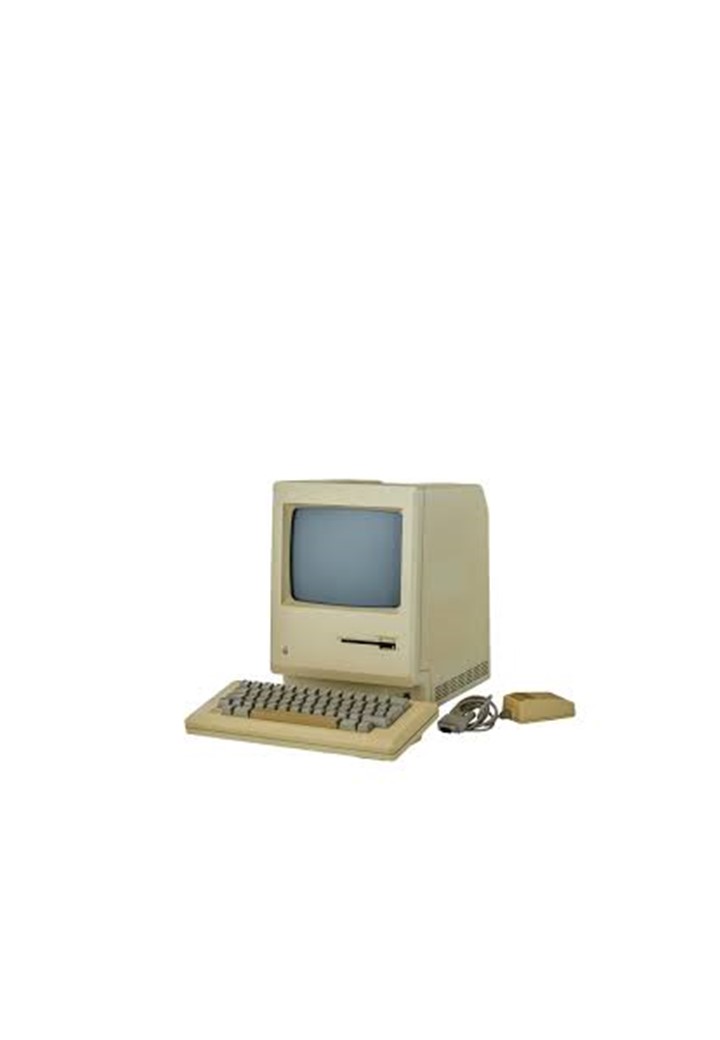
My first real encounter with a personal computer came in the mid-1980s, when the world was only beginning to understand what “computing” meant for ordinary people. It was the legendary Apple Macintosh 128K, released in 1984, and owning one during 1984–1985 felt like stepping into the future. At a time when most offices still relied on typewriters and carbon paper, the Macintosh quietly announced that a new era had arrived.
The Macintosh 128K looked modest compared to today’s machines, yet it was revolutionary. It came in a compact beige case with a built-in nine-inch black-and-white screen, a keyboard, and the strange new device called a mouse. Many people had never seen a mouse before. Instead of typing commands, we could point, click, and drag. This simple idea changed everything. For the first time, a computer felt friendly rather than intimidating. The smiling “Hello” that appeared when it booted up made it feel almost human.
With only 128 kilobytes of memory, the machine demanded patience and creativity. There was no hard drive. Everything ran from 3.5-inch floppy disks, which held just 400KB. Swapping disks became a normal ritual: one for the system, another for the program, and sometimes another for saving work. Yet within those limits lived powerful tools like MacWrite and MacPaint. MacWrite turned the computer into a smart typewriter, while MacPaint opened a small artistic world where drawing with a mouse felt magical. For someone used to pen and paper, this was nothing short of astonishing.
Learning the Macintosh was an adventure. There were no online tutorials or YouTube videos. We learned by experimenting, making mistakes, and discovering features by accident. Each beep, freeze, or error message taught a lesson. I remember the excitement of seeing text appear on the screen instantly, editing without erasing, and printing clean pages that looked professional. It felt as though ideas could flow faster because the machine removed many physical limits of writing and design.
More than just a tool, the Macintosh 128K shaped the way I thought. It introduced me to logic, structure, and digital creativity. It showed me that technology was not only for engineers but also for writers, designers, and ordinary people. In many ways, that little box planted the seed for how I later approached work, communication, and even storytelling.
Looking back, my first computer was slow, small, and simple by modern standards, yet its impact was enormous. The Apple Macintosh 128K was not just my first computer; it was my first window into the digital world. It taught me curiosity, patience, and the joy of learning something new. Even today, surrounded by powerful devices, I remember that early Macintosh with affection, because it was the machine that quietly changed my life and the way I saw the future.
Saviour Shanthalal Hettiarachchi
 Foundation for Lasting Relationship
One response to “My First Computer – APPLE (1984–1985) Macintosh 128K”
I loved MacWrite, Hypercard and Superpaint :)
LikeLike